The Best Time to Water Your Lawn – Backed by Science

The Secret to a Greener, Healthier Northern Colorado Lawn
Watering your lawn in Northern Colorado might seem straightforward. Flip on the sprinkler, let it run, and you’re done. But in the semi-arid climate of the Front Range—where sunshine is abundant, humidity is low, and temperature swings are large—when and how you water matters far more than most homeowners realize. The timing of your watering routine can determine whether your turf develops deep, resilient roots and stays lush, or whether it becomes patchy, heat-stressed, and vulnerable to disease.
On top of that, our region’s higher elevation and frequent wind mean water evaporates faster than in many other parts of the country. Lawns that are watered the same way they might be in the Midwest or on the East Coast often struggle here. That’s why a Colorado-specific approach is so important if you want consistent results.
This guide breaks down science-backed best practices for watering your lawn in Northern Colorado. You’ll learn the best time of day to water, why watering at night or midday can work against you, and how much water your lawn truly needs given our soil and climate. By the end, you’ll have a clear, reliable watering routine to help your lawn stay healthy, green, and resilient all season long.
Whether you’re caring for a brand-new lawn in a recent development or bringing life back to an older yard, these principles apply across the board. With just a few smart adjustments, you can dramatically improve how your lawn looks and how well it stands up to summer heat, kids, pets, and everyday use.

Early Morning: The Ideal Watering Window
(4 AM–10 AM)
The best time to water your lawn is early in the morning, between about 4:00 AM and 10:00 AM. This timeframe gives your lawn maximum benefit from every drop of water and takes advantage of the natural rhythm of the day.
Watering before most people are awake also reduces competition for water pressure in many neighborhoods. Your sprinkler system is more likely to run evenly and consistently when fewer homes are running showers, dishwashers, or irrigation at the same time.
Cooler Temperatures Mean Less Evaporation
Northern Colorado’s sun becomes intense quickly. Watering early allows more moisture to soak into the soil instead of evaporating in the heat. This improves efficiency and consistency and means you’re not paying for water that never reaches the roots.
In the middle of the day, a significant portion of sprinkler output can vanish into the air as vapor. In the morning, more of that water stays where it belongs: in the soil profile, available to the root zone.
Grass Dries Naturally Throughout the Day
Morning watering lets blades dry gradually as the sun rises. This lowers the risk of fungal diseases, which thrive when grass stays wet for long periods—especially overnight. Drying through the day gives your lawn a healthy balance between moisture and air.
You’ll also notice fewer issues with slimy or slick surfaces when the lawn has time to dry by evening. That makes the yard more enjoyable and safer for kids and pets who are playing outside.
Cooler Soil Supports Better Absorption
Cooler soil in the morning helps water travel deeper into the root zone. Deep water penetration encourages stronger roots, which are essential for heat and drought resistance. Shallow watering, by contrast, only dampens the upper inch or two of soil.
As roots follow moisture downward, your lawn becomes more self-reliant and less sensitive to brief dry spells, watering delays, or unexpected hot days. Deep-rooted lawns almost always look better in late summer than shallow-rooted lawns.
It Aligns With Your Lawn’s Natural Growth Cycle
Grass becomes active in the early morning. Watering during this time gives the plant what it needs right when it needs it, improving color, density, and long-term health. It’s similar to giving your lawn a good breakfast rather than a heavy meal right before bed.
When you consistently water during this window, you create a predictable pattern your lawn can adapt to. That consistency makes it easier to maintain a strong, resilient turf throughout the growing season.
Night vs. Afternoon Watering: What You Should Know
When you water is just as important as how much you water. Both nighttime and afternoon watering come with their own risks—risks that are amplified in Northern Colorado’s climate. Understanding these trade-offs will help you avoid damage that can take months to repair.
Many homeowners default to what fits their schedule rather than what benefits the lawn. With a few adjustments, you can keep your existing routine convenient while still protecting your turf from unnecessary stress.
Why Watering at Night Is a Bad Idea
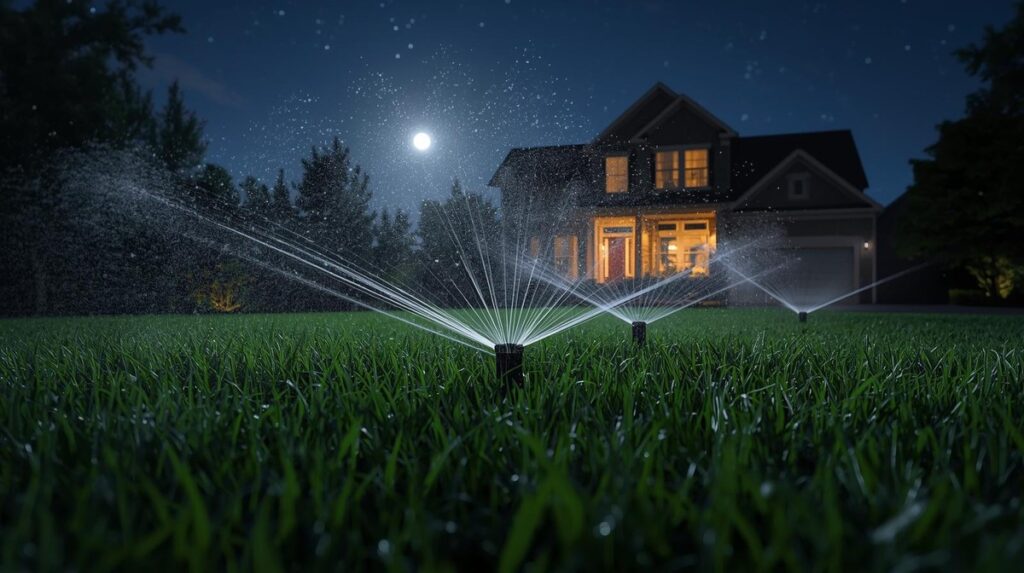
Night watering feels convenient, but it creates the perfect environment for lawn problems. Water sits on the grass much longer in the cooler evening air, and that lingering moisture leads to multiple issues that often show up as mysterious brown or yellow patches.
Because the lawn looks dark and quiet at night, it’s easy to think nothing is happening. In reality, that moisture is providing a perfect habitat for disease organisms to spread.
Night Moisture Encourages Fungus
Wet grass at night becomes a breeding ground for diseases like dollar spot, brown patch, and mildew. Without sunlight to help dry the blades, moisture can remain for many hours. Over time, these diseases thin out your lawn and make it harder for turf to recover.
Fungal problems are not just cosmetic. They can kill off sections of grass, invite weeds into bare areas, and require additional treatments or repairs that could have been avoided with better timing.
Cool Air Slows Evaporation
Temperatures drop quickly in Northern Colorado nights. Moisture lingers, the lawn stays damp, and the grass weakens over time. The cooler and more stagnant the air, the longer it takes for the surface to dry.
Low-lying areas, shady corners, and spaces near fences or structures are especially vulnerable. These areas may not get enough airflow to dry out overnight, which makes them prime spots for disease to start.
Shallow Roots Become a Long-Term Problem
Consistently wet surface soil encourages shallow rooting. Shallow roots struggle during heat, dryness, and foot traffic—problems that are common here. What looks like a green lawn in spring can quickly fade under summer stress if the roots are not well developed.
Once a lawn develops shallow roots, it can take an entire season or more of proper watering practices to retrain the root system. Preventing shallow roots in the first place is much easier than trying to fix them later.
Why the Afternoon Is Better Than Night—But Still Not Ideal
If you can’t water in the morning, the afternoon is the next best option. However, it’s far from perfect—especially in a region known for sunny, windy afternoons. The conditions that make afternoons pleasant for people are often harsh on water efficiency.
For homeowners with flexible schedules or manual sprinklers, a late-afternoon watering window—closer to early evening but not after sunset—can sometimes be a reasonable compromise. Even then, it’s still less effective than early morning.

Hot Sun Causes High Evaporation
Much of the water evaporates before it reaches the root zone. You end up using more water and get poorer results. In the hottest part of the day, a large share of what you apply simply doesn’t stay in the soil long enough to benefit the lawn.
This not only wastes water but can also violate local watering recommendations if you find yourself running your system longer just to compensate for evaporation losses.
Wind Disrupts Coverage
Afternoon winds are common along the Front Range. Wind distorts sprinkler spray patterns, causing uneven watering and dry patches. Some areas may get too much water while others receive almost none.
Over time, this uneven coverage leads to an inconsistent lawn—thicker and greener in some spots, thin and brittle in others. That patchy appearance is often a sign of both wind and poor distribution rather than a problem with the grass itself.
Quick Drying Can Stress the Grass
Water evaporates so fast that it often doesn’t penetrate deeply. The top of the soil gets wet, but the roots stay thirsty, leading to shallow rooting and frequent stress. The lawn may perk up for a short time after watering, only to wilt again a few hours later.
If afternoon watering is your only option, aim for later in the day—closer to 4:00–6:00 PM—when the sun is less intense. Even then, keep in mind that this should be a backup plan rather than your primary watering window.
How Much Should You Water?
Knowing when to water is important. But understanding how much water your lawn needs is just as critical in a dry, high-altitude region like Northern Colorado. Too little water leads to stress and thinning; too much water wastes resources and can actually harm the turf.
Finding the right balance starts with a basic weekly target and then adjusting based on your yard’s unique conditions, such as shade, slope, and soil type.
Weekly Water Requirements
Most lawns need 1 to 1.5 inches of water per week during the growing season. This includes irrigation and natural rainfall. Since our region gets limited rain and low humidity, irrigation usually provides most of the weekly total.
Cool-season grasses common in Northern Colorado, such as Kentucky bluegrass and fescue, are especially sensitive to prolonged drought. Keeping them within that 1 to 1.5 inch range helps maintain color and density without overdoing it.
Deep and Infrequent Watering Works Best
Deep, thorough watering sessions—just two or three times per week—encourage strong root growth. Daily light watering keeps roots shallow and weak and trains the grass to rely on constant surface moisture.
By watering less frequently but for longer periods, you help the lawn develop root systems that can tap into deeper reserves of water. That leads to a more resilient lawn that can handle hot, dry spells with less visible stress.
How to Measure Your Water Output
Guessing at how much water you’re applying almost always leads to overwatering or underwatering. Measuring your actual output gives you confidence that you’re meeting your lawn’s needs without wasting water.
The Tuna Can Test
Place several empty tuna cans around your lawn and run your sprinklers for 15 minutes. If the cans collect about half an inch of water, then 30 minutes equals roughly one inch. Adjust your schedule accordingly based on how many inches you want to apply in a week.
Repeat this test annually or any time you make changes to your sprinkler system. Nozzles, heads, and pressure can all change over time, affecting how much water your lawn receives.
Signs of Underwatering
Your lawn may need more water if you notice grass turning bluish-gray, footprints that remain visible, slow rebound when blades are bent, or brittle, patchy areas. These are early warning signs that the turf is under stress.
If caught early, many of these symptoms can be reversed with improved watering before permanent damage occurs. Waiting too long, however, can result in dead spots that must be repaired or reseeded.
Signs of Overwatering
Overwatered lawns often show mushy soil, excess thatch, mushrooms or fungus, and an increase in weeds like crabgrass. Standing water or frequent squishy areas are clear signs that you’re applying more moisture than the soil can handle.
Overwatering can also suffocate roots by reducing the amount of oxygen in the soil. This makes grass more vulnerable to disease and reduces its ability to withstand stress later in the season.
Smart Watering With Automatic Timers

Automatic timers and smart irrigation systems take the guesswork out of watering. They help you stay consistent with timing and frequency, even when life gets busy.
For many homeowners, this is the difference between a lawn that only looks good in spring and one that performs well from early spring through late fall.
Set-and-Forget Morning Watering
Timers let you water in the early morning without changing your routine. Set it once, and it handles the rest. This ensures that even on days when you’re rushing out the door, your lawn still gets the right amount of water at the right time.
Most controllers allow you to schedule different zones separately, which is helpful if some areas of your yard receive more sun or wind than others.
Smart Controllers Adjust Automatically
Smart systems adapt watering to weather—reducing output on cool or rainy days and increasing it during heat waves. This improves lawn health while conserving water and staying aligned with local watering recommendations.
Many modern systems can be controlled from a smartphone app, allowing you to pause or adjust watering when you’re out of town or when conditions change quickly.
Soil Type Matters
Clay and clay-loam soils dominate Northern Colorado. These soils hold moisture longer but absorb water slowly. Applying water too quickly leads to runoff and water wasted down the sidewalk or street.
Using multiple short irrigation cycles (cycle-and-soak) helps water penetrate deeper and prevents waste. This approach gives the soil time to absorb water between cycles instead of letting it pool on the surface.
If you’re not sure what type of soil you have, a simple soil test or professional evaluation can provide clarity. Knowing your soil type is one of the most overlooked but powerful tools in lawn care.
Bonus Tips for a Healthier Northern Colorado Lawn
Dialing in your watering routine is a huge step, but a few additional practices can take your lawn from “good” to “great.” These tips complement proper watering and help your yard handle Colorado’s unique challenges.

Mow at the Right Height
Most lawns do best at a height of 3 to 3.5 inches. Taller grass shades the soil, reducing evaporation and protecting roots from extreme heat. Cutting too short exposes the soil and dries it out faster.Frequent, lighter mowing is better than infrequent scalping.
Aim to remove no more than one-third of the grass blade at a time to reduce stress on the plant.
Aerate Your Lawn Annually
Clay soils compact easily. Aerating once a year—ideally in spring or fall—improves water infiltration, root growth, and overall turf health. It gives roots access to air, water, and nutrients they need to thrive.
Over time, annual aeration can dramatically improve the structure of your soil, making every watering more effective and helping your lawn better withstand traffic and environmental stress.
Use Mulch Mowing
Leaving finely chopped clippings on the lawn helps build better soil structure and retain moisture. As the clippings break down, they return nutrients to the soil and reduce the need for synthetic fertilizer.
Mulch mowing also helps cushion the soil surface and protect it from direct sun, further slowing evaporation and keeping the root zone more stable.
Fix Dry Spots With Targeted Watering
Areas exposed to intense sun or poor sprinkler coverage can dry out faster. Spot-watering or adjusting your irrigation prevents long-term damage and helps maintain a more consistent look across the yard.
Dry spots are often indicators of coverage issues, soil compaction, or slope-related runoff. Addressing the cause, not just the symptom, will give you better long-term results.
Improve Soil With Compost
Annual compost applications help lighten clay soils and improve water absorption. Healthy soil leads to healthier turf that uses water more efficiently and recovers faster from stress.
Even a thin layer of compost spread across the lawn can make a noticeable difference over time, especially when combined with aeration.
Check and Align Sprinkler Heads
Sprinkler heads can shift or clog. Checking them a few times each season ensures even coverage and avoids wasted water. Misaligned heads often spray sidewalks, driveways, and fences instead of grass.
A quick visual inspection while the system is running can reveal issues you might otherwise miss, such as blocked nozzles or low-pressure zones.
Follow Local Watering Guidelines
Many Northern Colorado communities publish watering recommendations or restrictions. Staying informed helps conserve water and fine-tune your routine to local expectations.
These guidelines are often based on regional weather patterns and conservation goals, so following them is not only responsible but also generally in line with what your lawn needs to stay healthy.
Small Changes That Make a Big Difference

Watering your lawn may seem simple, but the details matter—especially in Northern Colorado’s dry, sunny climate. When you water, how deeply you water, and how consistently you water all impact your lawn’s health in powerful ways.
Early-morning watering remains the most effective approach. It improves absorption, reduces disease risk, and supports your lawn’s natural growth cycle. Avoiding nighttime watering and limiting afternoon irrigation helps prevent stress and disease that can be difficult and costly to fix later.
Understanding how much water to apply encourages deep, healthy root growth that withstands heat, wind, and drought. Pair that with good mowing habits, aeration, soil improvement, and regular sprinkler checks, and you have a sustainable, effective lawn-care strategy tailored to Northern Colorado.
By combining the right timing with smart watering amounts, soil awareness, and good lawn-care habits, you can grow a greener, fuller, more resilient lawn all season long. And if you ever need help fine-tuning your irrigation or improving overall turf health, professional support can make the process easier and more effective.
Your Northern Colorado lawn can look its best—year after year—with just a few informed adjustments to the way you water.